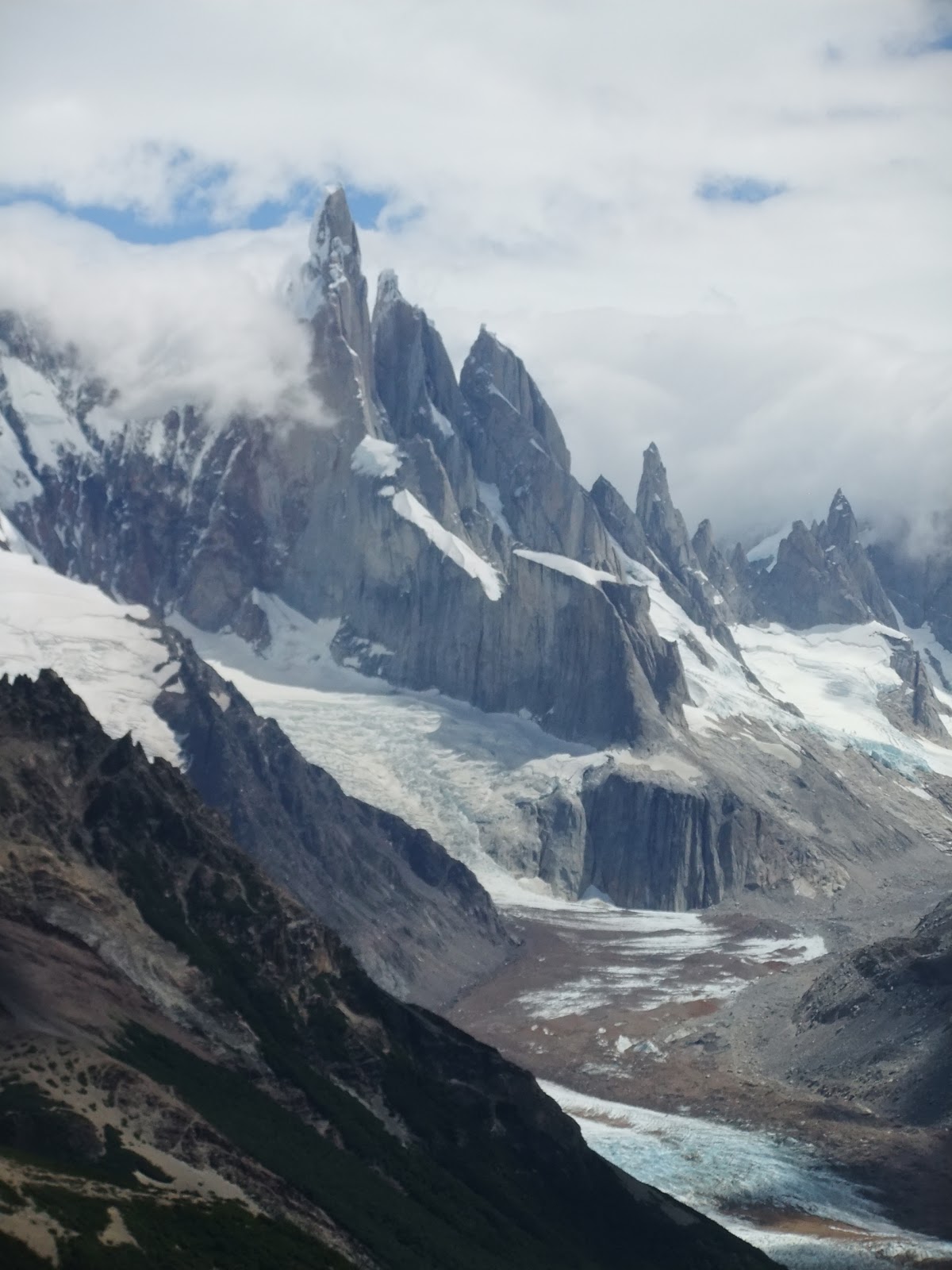
“Climb the mountains and get their good tidings. Nature’s peace will flow into you as sunshine into trees. The winds will blow their own freshness into you, and the storms their energy, while cares will drop away like the leaves of Autumn.” John Muir

INTRODUCTION
Why climb mountains? Climb the mountains to glimpse a different perspective on your life or life in general. To survey the earth folded and bent with one crease after another like waves upon the sea for mile after rolling mile. Climb the mountains for the physical, mental, emotional and spiritual challenges it affords, which adds depth and breadth of character. To find out if one has what it takes to get to the top; going over obstacles of rock or down tree, along cliff walls and through torrential streams, but not being stopped. Mountain climbing also helps to reveal how insignificant human’s lives are, yet how important they are.
The idea of mountain climbing strikes an accord in many people’s romantic hearts. Oh, to sleep outside in your mother’s arms underneath a dazzling black tent of stars overflowing and spilling across the heavens, to push your body to its limits learning about muscles you didn’t know you had as they ache, then jumping into jeweled-like lakes bringing in the freshness to rejuvenate your tired body. The more raw, juicier parts that don’t seem to fit into one’s imagination are not showering for days, not shaving, eating some of the same foods over and over again, getting diarrhea from the local water and/or from chlorine tablets, squatting over a hole in a outhouse with no seat then after a certain elevation defecating in black plastic bags and carrying it around on your back like a rucksack, peeing in a cup inside your tent because the weather outside is negative forty below, water bottles freezing solid. Fingers and toes threatened with frost-bite on a daily basis, red spots on your feet transforming from blisters to calluses, one's lips and nose cracking and bleeding from the aridity of the land and air. Taking one step and then three deep breaths to allow your heart and lungs to catch up to your body, carrying backpacks of around fifty pounds or more. Headaches that literally debilitate you and put you on your ass. Too not be able to have a solid night of sleep because of relentless wind and lack of oxygen. Yeah, let’s go climb some mountains!

How and where does one begin to explore and capture the experience in words of climbing the highest mountain in the western hemisphere, which is considered ‘the roof of the Americas’? I will begin in the beginning, but not go exactly event by event, day one, by day two, by day three. I do not want to bore the reader like in both Gabriel Garcia Marquez’s masterpiece One Hundred Years of Solitude where he goes on to explain the family tree or in the Bible’s first book of Chronicles; where after the flood kills every human being and they have to explain how we apparently have human beings multiplying throughout the earth, as in chapter 10 “Cush begat Nim’rod: he began to be mighty upon the earth. 11 And Miz’ra-im begat Lu’dim, and An’a’mim, and Le’ha-bim, and Naph’tu-him,” (enough of that, I hear snores).
Logistically speaking, how does one plan for a twenty day trip on a mountain called ‘Aconcagua’. First of all, one has to go to downtown Mendoza obtain a twenty day permit into Aconcagua Provincial Park, which during high season is an atrocious seven hundred and twenty dollars per person (U.S). Then go to local gear shop, which was a ‘Mountain Hardware Store’ to rent enough gear to camp in extreme conditions like practically surviving on the moon spending around five hundred dollars per person. Bare with me, or feel free to skim the next two paragraphs of lists. A quick list of gear we did not have with us that we needed included: -40 degree down sleeping bag, plastic Scarpa mountaineering boots with liners to prevent frost bite, trekking poles, fleece pants, gore-tex wind pants, down jacket, gore-tex wind coat, fleece jacket, fleece, gaiters, glove liners, waterproof down mittens, gore-tex mitten covers, ice-axe, three-person mountaineering tent, ski goggles, one more white gas stove, four-five liter and half white gas bottles.

Then we had to plan for twenty breakfasts, lunches, snacks and dinners, which all in all, cost around three-hundred dollars per person. We went to the local grocery store loaded up the shopping cart: ten meals of instant unseasoned mash potatoes (blah), six Ramen Noodles (new found love for now), one-hundred energy/granola bars per person (uhh!), hard candies (mountaineer’s sugar fuel in high country to get quick sugar in the blood stream), tons of salami (way too much), lentils, carrots, ten onions, garlic, ten avocados, packets of tang (it is not juice I don’t care what you tell me), block of cheese, crackers, lots and lots of chocolate bars, oatmeal, raisins (with seeds that taste like sand granules), figs, peanuts, (they barely sell peanut butter anywhere in Argentina, but in three stores), almonds, three loaves of bread, honey (which doesn’t last well in a plastic bottle in below zero degree weather), tea bags of yerba mate’, black tea and peppermint tea (for drinking in mornings and up in high country because your body digests hot fluids faster than cold), etc.


We planned every last detail down to the nitty gritty, which is normally taken care of by a guide if one is willing to pay anywhere from four to eight thousand U.S dollars. In these guided groups they cook for you, set up your tents and you can rent mules to carry your stuff to base camp at fifteen thousand feet then rent porters (human beasts of burden) to carry it to each of the four high camps above that. Ilan and I rented one mule to tote our stuff past the fist camp to base camp, while we had to lug everything in the mean time. We spent around two to two and half thousand dollars on food, gear, permits and a mule. Mules don’t bear as much weight as they do in the states because of altitude.
While we organized the logistics of our trip from our hostel in Mendoza, we met a girl from Anchorage, Alaska named Jackie Campbell, who literally ran away from her family to join the circus. She works for the ‘Circus of Light’, an international traveling circus show. She is in charge of the hiring and firing of the seasonal workers who work helping set up the shows, putting up the big top from city to city.
Meanwhile, we wolfed down our last dinner at a small Peruvian dive off the main drag recommended by our hostel managers. This would be one of our last civilized meals for quite some time desiring to be blessed with a good one. We ambled inside on a mid-Sunday afternoon and were greeted by smiling faces. We requested a menu and were shown posters on the wall. Our first impression was about high-tailing it out the door because who has posters on the wall for a menu besides that dumb clown-who-is-not-a chef, Ronald McDonald. We chose a lamb dish (cerdero), sat back ordered a liter and half of Stella Artrois and waited for our meals. The hot dishes came out soon and were heaping above the plate. A circular ladle-full of white rice, a pile of sliced iceberg lettuce with diced onions, sliced carrots and tomatoes with a splash of dressing, followed by roasted lamb resting on top of cubed, basted and baked potatoes. They inquired if we wanted picante sauce and being the spice lover I replied, “Yes!” I spooned it all over the platter as the Peruvian family in the back viewed in amazement not only at these gringos, but one who really loves spice or was just too dumb to know what it was. We shoveled the food into our mouths as I kept conveying them the thumb’s up about how great the food was. Peruvian food was a nice respite from the lack of spice found in most Argentinian dishes.

PILGRIMS PROGRESS
(at a snail’s pace, a step by step, shuffle up a very large mountain)
We gathered our things, caught a taxi to the bus station and intercepted a bus to the town of Puente del Inca; the starting off point of the beginning of an odyssey. We rode the bus for three and half hours through the cordillera or foothills of the Andes as rain pelted down, blanketing the windshield, followed by pockets of sun revealing freshly fallen snow up high above fifteen thousand feet. Foothills started off small becoming bigger and bigger masses of material of rock and earth, the deeper we traveled towards the Chilean border. Doubts and fears arose in our minds as more and more precipitation pursued because neither one of us wanted to set up our tents in a storm. The town of Puente del Inca rests at about ten thousand feet. The bus dropped us off on the side of route seven with two giant backpacks and two overstuffed duffel bags of food, fuel and gear as we headed into the 'unknown'.
Moments after stepping off the bus, a tourist van pulling a trailer with the logo of ‘Aconcagua Trek’ pulled up and Immanuel jumped out, shook our hands and loaded the gear into the back of the van. He drove us a block away, dropped us off and said he would be back. We set up camp, ate dinner and went to bed early. That night we camped not far from the Aconcagua cemetery, where each year numerous climbers die and then they are then buried there. All night long cars and semi’s motored up and down the highway as the wind whipped and roared, shaking and ruffling the tent like climbers of the past warning us what lies ahead. Little did we know that was the beginning of several nights of sleep apnea that would haunt us through the trip as we tossed and turned the layers of night away.


Cerro (Mount) Aconcagua, the highest peak in all of the Americas considered the ceiling of the Americas is 6962 meters above sea level or 22,841 feet high. It is the highest peak in the world outside of the Himalayas. There are several other 6500 meter peaks in the Andes bordering the spine of Chile and Argentina. Aconcagua is one of the seven summits. The seven summits are the highest peak from each of the seven continents. They include from highest to shortest; Everest (Asia) 28,035; Aconcagua (South America) 22,841; Denali (North America) 20,300; Kilimanjaro (Africa) 19,340; Elbrus (Europe) 18,510; Vinson Massif (Antartica) 16,050 and Carsentz Pyramid (Australia) 16,024.
The name Aconcagua is interpreted in the Quechua language as the ‘stone setinel’ or sentry and in the Aymara language the ‘snow-covered mountain’. The height of the mountain was caused by the tectonic uplifting of the Nazca and South American plates and the subduction zone geometry. The recent uplifting of the plate has produced remarkable irregularities in the landscape as well as being carved by glaciers receding through the landscape.
Aconcagua serves as a metaphor in my life as the mountains I must climb, the obstacles I must jump or go around as well as the fears I must face. To quit running away from my dreams of writing and express my art to the ends of the earth releasing every drop into the fabric of the universe. It is not about whether I made it to the top or not, but about if I gave it my best shot. It all depends on the ability and agility of my mental prowess because physically it is just a walk up a very large piece of material and depends on the weather produced at such a height and by such a geological expression of the earth.

According to the archaeological record, the earliest signs of humans on Aconcagua dates back numerous centuries before the current era of mountaineering activities. Aconcagua, a massif, which was the home of several native peoples, such as Araucanos, Pehuenches, Puelches and Huarpes. Later on, armies of the legendary Inca peoples from Cuzco invaded the Central Andes. Temporary settlements left by native peoples still remain in the area as ruins where they came during summer months to pursue and hunt guanaco herds. Additionally, ancient Incaic burial grounds attest to the Inca’s worship to Aconcagua or possibly to the sun god and what better place to do that than to be as close to the sun as earthly possible in their particular bioregion. A couple of decades ago mountain climbers climbing the South Face came across an Incan mummy still preserved due to the climatic conditions. Aconcagua was an ancient funerary site or burial area where they sacrificed humans to the gods.
The movie, Seven Years in Tibet was filmed in Aconcagua Provincial Park because of the restrictions placed by the Chinese government not allowing entrance into Tibet. In contemporary times, people come from far and wide like pilgrims to pay homage to the mountain.


By mid morning we trekked up canyon as lazily, floating, lamb-like cumulous clouds grazed the blue sea of grass above the Neopolitan ice cream-colored mountains, just above the chartreuse colored what-little-plant-life-that-lived there. If one had hands large enough one could wring out the pastel colors that stream horizontally across the mountains and make pastel crayons and/or chalk. A Willy Wonka milk-chocolate colored creek flowed in the valley’s wedges between arid meadows with tufts of grass and pin-cushioned bunches of wildflowers, along with other plants that evolved thorns, spikes, claws and poisonous darted tips to dissuade herbivores from grazing too heavily because they had a hard enough time subsisting as it is in such an arid climate. Some researchers consider this area to be the ‘jungle of the arid Andes’ due to the rich diversity of native plant species.


Sky scrapers of rock and ice tore the blue fabric of heaven as winds whipped up canyon during the day and down canyon at night. A few birds chirped hopping on the ground before flying off from our approach; the birds included were grey-hooded sierra finches, miners (who strutted their stuff right up to your folded legs as you sat on the ground as they searched and begged for crumbs), to rufous collared sparrows, along with caracaras aerial acrobating and giant Andean Condors sailing through the sky. The only other sound that permeated the rough, barren and vast landscape was boots grading across gravel along with the beat of your throbbing heart crying out for more oxygen in the oxygen deprived air. The arid land and air caused dry, bloody boogers to form in your snot locker; eventually forming crevasses in your nostrils and cracks upon your lips; which both bled without the help of your prodding finger.

We arrived at the first camp of Confluencia following a chocolate-milk colored stream threading through the 5,000 meter or 18,000 foot peaks that crested above us. The stream was glacially fed from Glacier Horcones, which as high up on the flanks of Aconcagua. The approach to the mountain was not quite as long as I originally anticipated, but was all about acclimating to the height of a savage beast of a mountain that created its own rules and weather. The first camp was littered with tents of all sizes, along with a ranger station, medical doctor’s tent and a helicopter pad. Numerous outhouses lined the back of the camp with cut-out holes in the ground for squatting over. The local water came straight from a glacier unfiltered and you could fill up nalgenes, pots and pans with this water. The water was very high in nutrients causing diarrhea-cha-cha within a day of the initial swallow.


This camp sits at around 12,000 ft and slight headaches creeped into our mind every night. The next morning we met our neighbors Nick from Florida (who served 10 years in the Air Force) and Joel from Austin, TX. After talking with them we found out they were trying to climb the mountain in ten days on their terms. Ilan and I both doubted their success. Later that day we hiked up to Plaza Francia to stare into the South Face of Aconcagua. White Glaciers hugged its cheeks and covered its entire face. The South Face is like the North Face in the northern hemisphere where both are sheer and hold the snow longest, away from the intense glare of the summer sun. Reddish-brown dirt soiled the land with giant VW sized boulders littering the land, while wildflowers grew in the shadows of these behemoths. Small pools of red sea like water were deposited and nestled in the low spots left in the footsteps of glaciers receding under rock and dirt. The glaciers were like conveyer belts moving and bulldozing dirt, stockpiling it into moraines slowly and incrementally over centuries. As we were ambling back a thunderous roar came bellowing down the mountain as an avalanche plowed down. Luckily, nothing was in the path of the white freight train. We rambled back down and remained in Confluencia one extra night making it three nights due to lack of sleep and to acclimate more. We had a mandatory medical check-up at each of the lower camps where doctors checked your pulse, heart rate and lungs to make sure you were adapting to the mountain.


The next day we trekked seven hours to Plaza de Mulas where our duffel bags greeted us at fifteen thousand feet high, where they were dropped off by the gauchos (Argentine cowboys and mules. This was base camp for the next five to six days. The camp sat in a basin cupped high in the breasts of several mountains. There were still five high camps to go above this. Mules carrying loads did not breech past this camp because of altitude. This camp had lots more tents, had small wall tent restaurants, the highest art gallery in the world (where the legendary Argentine artist Miguel Doura resided, as seen in National Geographic), and the highest hotel in the world is (like a trailer on steroids), but now closed due to lack of funds. Wealthy trekkers could still rent beasts of burden to carry loads past this in the form of human porters for around one-thousand dollars.


We woke in the morning by a sun baking the tent after it rose above the towering Aconcagua. Walking around that morning I ran into our American friends Joel and Nick who were now two days ahead of us. They were heading back down with full backpacks. They said they went up to camp Canada the night before but due to pounding, excruciating headaches they have had for days was causing them to head home. They were not patient with the mountain and as one doctor told me, “Don’t embarrass acclimation.” Acclimation is no joke and a real phenomena that literally put people on their asses for hours at a time.

Later that day, Ilan and I scrambled up Bonete Peak, a neighboring 5054 meter or 18,000 foot peak; small in comparison to several nearby giants. We climbed it to help with the acclimatization process. We could stare right at Aconcagua, being it was just above base camp, but most days Aconcaugua was robed in clouds. The higher one climbs the less oxygen in the air and in the veins producing the excruciating headaches and loud panting. We came down the mountain as the ceiling of clouds vaulted closing in around us, enveloping and swallowing everything around us. Snow mixed with groppel (the in-between state of rain/sleet/snow) came pelting down on us. We made it back to camp and had two rest days after this.


Each night the wind was an animal trying to burrow in and underneath the tent. The beast would shake the tent, wrestle it, attempt to hurl the tent into oblivion. Every night it would begin and you would think to yourself that it was your tent mate moving about. You would think to yourself, “What the hell are you moving for? Can’t you sit still? Just relax, would you? I am trying to sleep.” Then you would realize that it was the unrelenting wind and your friend is thinking the same thing. I had earplugs in both ears and I would try to ram them all the way into my brain trying to stop the driving, howling menace of the wind, but she would not quit until mid-morning as if the mere daylight was a cop’s high beam pausing it in place. Each night the wind was a test warning you, “Don’t you realize nothing lives up here and you don’t belong here. Go away! Be gone, you dumb humanoid!”

Night after sleepless night, the banter, the howl of wind slapping the rainfly back and forth not lulling you to sleep and each night the unwritten childhood/meant for adults fables entered your mind one after another. The wind tested your patience and measured your creativity to see if you would crack or to see if you had what it takes to be here and worthy of this mountain.
“Are you mentally sound enough? Are you physically strong enough and have what it takes? Or will you give in when the wind cries, Mary?”
Fable one:
“Hey are you awake? It is me, Wendy. Don’t forget me. You can’t forget me. I won’t let you. I will be back in a few minutes.”
“Hey are you awake? It is me, Wendy. Don’t forget me. You can’t forget me. I won’t let you. I will be back in a few minutes.”
Just leave me alone. Let me sleep, would you?
“Hey, are you awake? (over and over again, all night long)
That tempestuous bitch with her deafening roar would not let us just be.
Fable two: THE THREE LITTLE PIGS: (alternative version) THE FOUR LITTLE PIGS
Once upon a time there were four little pigs and time came for them to leave home and seek their fortunes. Before they left, their mother told them, “Whatever you do, do it the best that you can because that’s the way to get along in the world.”
The first little pig built his house out of straw because it was the easiest thing to do.
The second little pig built his house of sticks. This was a little bit stronger than a straw house.
The third little pig built his house of a North Face mountaineering tent, which could handle more wind or was suppose too.
The fourth little pig built his house out of bricks.
One night the big bad wolf, who dearly loved to eat fat, little piggies, came along and saw the first little pig in his house of straw. He said, “Let me in, let me in, little pig or I’ll huff and I’ll puff and I’ll blow your house in!”
“Not by the hair of my chinny chin chin”, said the little pig.
But of course the wolf did blow the house in and ate the first little pig.
The wolf then came to the house of sticks.
Let me in, let me in little pig or I’ll huff and I’ll puff and I’ll blow your house in.”
“Not by the hair of my chinny chin chin,” But the wolf blew that house in too, and ate the second little pig.
The wolf then came to the house made of North Face mountaineering tent.
Let me in, let me in little pig or I’ll huff and I’ll puff and I’ll blow your house in.”
“Not by the hair of my chinny chin chin,” But the wolf blew and blew until the third little piggy came running out driven mad by insanity and of course the wolf ate him too.
The wolf then came to the house of bricks.
“Let me in, let me in” cried the wolf or I’ll huff and I’ll puff till I blow your house in.”
“Not by the hair of my chinny chin chin” said the pig.
Well the wolf huffed and puffed but he could not blow down that brick house. But the wolf was a sly old wolf and he climbed up on the roof for a way into the brick house and climbed down the chimney, but luckily the smart little piggy had a fire in the fireplace and out flew the wolf from the chimney.

Fable three:
The wind is a policeman suffering from a terrible case of Alzhiemer’s disease and keeps coming around to frisk your tent every five minutes. “Just leave me alone. I already told you that I don’t have any drugs and for that matter, you already searched me. (over and over again) Five minutes go by and the same thing happens. Wish I did, so I could get some much needed sleep. I have been clean for a couple of months. Why did I choose to give up now to quit?
“No back-lip, sir! You know the routine. Get on the ground in your sleeping bag, arms behind your back and try to sleep!”
“No way!”
“That’s it, sir. Drop your drawers, grab your ankles and give me two big coughs!”
Cough, Cough!
Meanwhile, hiking in my big, black boots (my Danners) up to Camp Canada to cache some supplies and gear for future use then head back down to base camp. A storm blew in from Chile smothering everything in a blanket of snow as we tele-screed back down the slope. We were cooped up in the tent for the rest of the afternoon as temperatures plummeted. The morning started off sunny and clear. The snow unleashed several inches throughout the afternoon and into the night. Camp Canada lies at around 16,800 ft above sea level. Back at Plaza de Mulas, I see an exact look-a-like to my good friend Brian Roland (Argentine-style) with a huge beard. I should have taken pictures, but chose not. Also met a legendary Polish climber Ryszard Palowski who has climbed Everest three times, south face of Annapurna (solo), Aconcagua 17 times, Denali, El Capitan, Half Dome, K2, Ana Dablam, Fitz Roy (El Chalten), Torres del Paine, etc, etc. He is now in his mid-fifties and is guide who leads clients on mountains all over the world.

I was amazed at the number of mountain guides, clients and porters who smoked cigarettes. One Argentine mountain guide by the name of Gordo smoked numerous cigarettes a day and has climbed Aconcagua nine times and been turned around various times by weather and because clients could not make it, so he had to lead them back down.
I also met another guide by the name of Wally Berg (he did not smoke) from Canmore, Alberta. His company is called ‘Berg Adventures’ and he was leading a group of six clients with three Bolivian porters to the top. Wally grew up in Colorado and has spent time in around Glacier National Park’s east side. He leads trips on all seven continents climbing the seven summits and other expeditions. Wally was friends with Scott Fisher and Rob Hall, two mountain guides who died in the tragic events on Mt Everest in ‘96, which is talked about in the popular book by Jon Krakauer’s, Into Thin Air. There is also a book titled The Shadow of Kilimanjaro, by the famous travel writer Rick Ridgeway. It is a story about climbing Mt. Kilimanjaro on the Tanzania/Kenya border in Africa then they descend and hike through the bush to the coast and Wally Berg was the guide of that trip. A wonderful book I read years ago after summiting Kilimanjaro.
Also met a wonderful Argentine couple who I drank yerba mate' with, Vanessa, who was getting her Ph.D in Chemistry and Gaston, who was studying to get his certificate to be a mountain guide and they were from the province of Cordova, Arg in the northern part of the country just west of Buenos Aires. She was fluent in English and he was not. They were awesome folks.

Also met a wonderful Argentine couple who I drank yerba mate' with, Vanessa, who was getting her Ph.D in Chemistry and Gaston, who was studying to get his certificate to be a mountain guide and they were from the province of Cordova, Arg in the northern part of the country just west of Buenos Aires. She was fluent in English and he was not. They were awesome folks.

Subsequently, as my body climbed higher my internal dialogue turned more philosophically towards the world of time. In geological time, the whole span of humanity is just a blink of an eye. On a twenty-four hour time frame, humanity did not show up until the twenty-fourth hour with fifty-six minutes left and seconds ticking. This sounds a bit nihilistic like what is the point of our lives, but each of our lives is significant and it does matter what we do with these nano seconds of our life. Mountains crumble to the sea, trees whither and die and species go extinct, while ancient civilizations come and go. What are you going to do in the meantime, with your life?
Life call it what you will; the all-encompassing omni-present force that spurs continuation: God, Allah, Buddha, Nothingness, Wanka Tanka, Naapi, Coyote, Raven, Yahweh, Kali, Zeus, Trickster, or any other name you would like. They are only letters making up different words and we all have different coloring crayons and letters trying to spell it with a three year old vocabulary and understanding. It is what it is. As people of the world and of different cultures/religions we need to move beyond the idea of ‘mine’ or possessing a monopoly on truth whether a creationist, agnostic or atheist, but are all children here to live and learn.
The last night in Plaza de Mulas/base camp we decided to give one of these restaurants a chance. We went to one where Juan served us and Roscillo was the main chef. The place was overpriced, but then again all the food was cargoed on the back of a mule to 15,000 feet. We both bought lomo sandwiches. Lomo sandwich is famous in Argentina and is a particular cut of sliced beef with a slice of ham, egg, lettuce, tomato and onion on two pieces of bread with special seasoning. The lomo cost thirty-five U.S. dollars and was the best one I have ever had and normally cost thirty-five pesos or seven to eight U.S. dollars.

I don’t know if it was the grease factor or change in diets that night from the usual instant/dehydrated meals or what, but that lomo tore up our gastrointestinal tracts as we blew gas into our fart sacks (sleeping bags) and nearly gassed ourselves out of the tent all night long like a concentration camp.
I don’t know how many people when they hear of mountaineering think of Argentinians, but the the number one country’s people who climbs this peak are them, followed by Americans then other European groups. One can walk into any of the camps and find Argentinians sitting around sharing and passing mate’ gourds around in a circle like Native Americans do a peace pipe. We met Koreans, Columbians, Bolivians, Polish, Czechs, Slovakians, Canadians, Norwegians, Swiss, Japanese, Siberians, Danish and Irish people up on the mountain. In fact, one Siberian said the summit of Aconcagua was colder than Siberia. After being up there I don't doubt it.
That last day in base camp everyone must have one last medical check-up before they go to high camps to make sure everything is in working order. After gathering everything up and strategically planning what food and gear to take with us we headed up to the first high camp of Camp Canada and cached the rest of our food in a duffel bag then placed it in a wall tent until we got back. We lugged our stuff up to the camp that was on an arete, but was hidden behind some boulders. This camp was 16,800 feet high. There were over twenty tents there with over forty people that first night. Ironically, the second night the majority of people were Canadian, eh. The next day we bumped our stuff up to Nido de Condores (Nest of the Condors) to stage it there.

That morning before heading up to the next camp we watched a small grayish-red fox scavenge around slyly slithering behind some boulders not too far away from camp. We headed up to the second high camp of Nido de Condores where we would be for multiple days. This camp lies nestled high in a flat near the saddle of Aconcagua and Mt. Brazil and is over 18,300 ft high. Snow-line was several hundred feet below this camp. The snow was a stale, frozen crunch. The first time we were up here we stashed our duffel bag too close the helicopter pad so we decided to move camp closer to Wally Berg’s group since they took a liking to us and actually gave us free food once in awhile (a hamburger, oreos and crackers).


We found a place to camp and I began to use an avalanche shovel the Bolivian porter Sergio gave me from Wally Bergs group to level out a good camp spot, while Ilan went a couple of hundred yards away to grab the duffel bag. Ilan started shoveling, but was really starting to get hit hard with a headache. He got back and we both set up the tent and then we were both laid out with debilitating headaches that crushed us. We laid down in the tents without even blowing up our therma-rest mattresses. The headache was worse than the worst hangover imaginable. It felt like your head was in a vice and someone else was cranking away at it. We both popped some aspirin, drank some tang and crashed for the next hour or two trying to sleep it off. Neither one of us drank enough fluids on the hike up there in the blistering sun and now it was paying us back.


According to Wade Davis, a famous cultural anthropologist/ethnobotanist/professor/author who wrote many great books including; One River, Light at the Edge of the World and Serpent Under the Rainbow, where he studied different cultures and how they relate to the landscape through their plants where he describes how in many higher elevation cultures like those found in Bolivia, Peru, Ecuador, Guatamala and in Columbia that these people chew on cocoa leaves to alleviate the high altitude sickness. Cocoa leaves is not cocaine, but is derived from it and actually has a miniscule amount of cocaine in each leaf. The leaves are also used to stave off hunger, relieve the pressure in the head from lack of oxygen in the air and help give the body calcium from the lack of calcium found in many foods in these bioregions. Unfortunately, there was no cocoa leaves available and in fact, throughout Argentina cocoa leaves are highly illegal except in the two northern provinces of Salta and JuJuy, which border Bolivia. If I had the opportunity on this trip I would have definitely chewed on these leaves. Each leaf has a very small amount of cocaine but just enough to do the trick and help alleviate Acute Mountain Sickness. I tried searching in several health food stores in city of Mendoza to find Cocoa leaf tea, but to no avail. They do sell this tea in the states in some health food stores and in natural food stores like 'The Good Food Store' in Missoula, MT.

After base camp at every camp one was given a black plastic bag to defecate in. At the end of the trip we had to show it to the rangers and have them sign off on a piece of paper that one did indeed release their little brown food babies into a bag. I don’t know exactly why they did not have outhouses in the high alpine country, but I do know that the bag is because pooh does not decompose at such high elevation because lack of oxygen, plants, microbes and no insects. Unfortunately, during the day the bag would thaw, but at night it would get cold enough to freeze the contents and solidify them. The sun as it set caused the sky to blush in mauves, peach and tangerine streaks painting the heavens above ridge after everlasting ridge. But, as soon as the fat ol’ orb in the sky fell the temperatures would plummet from the thirties to negative thirties causing everyone to seek shelter and warmth in the temporary homes and mummify hiding inside in their negative 40 degree sleeping bags. We would hunker down early to be warm realizing the whole time that slumber would not come for six or seven hours, but always hoping sooner. Additionally, one would have to sleep with your camera battery in your pocket in your sleeping bag to prevent it from depleting the juice. The camera would not even work up high above 20,000 feet.


Each morning after tea I would have to go off with my black plastic bag and find some boulder to hunker behind. It was and wasn’t surprising to find all the little brown soldiers orphaned to fend for themselves in that frozen tundra. It is quite disgusting that people were not more responsible and able to place them in the bag that they were given, but then again we are talking about humanoids (not a very smart species that is ruining their planet as we speak). I understand that sometimes people get sick including myself and your ability to have solid brown bombs did not come easy and it sprayed out behind you like plane spraying a field full of herbicides.
Conversely, the frozen alpine tundra mars like landscape was blanketed in a thin layer of hoarfrost snow covering the ground. The stiff, crisp, styrofoam-like crunch of crampons smashing hoarfrost snow as we slowly trudged along up to Camp Colera (not cholera), which was around twenty-thousand feet high. We hiked up here on a beautiful bluebird day that was my 34th birthday and the twelfth day on the mountain. We went up there just to acclimate and came back down. We stayed down at Nido de Condores for five nights. Each day people came down from the higher camps and some successfully summitted while others turned around in defeat from the menacing wind that would reach up one-hundred kilometers an hour per day. Some days you could tell how strong the wind was from the vapor trails tailing off the summit in white sprays of snow. Only about fifty percent of the people who attempt make the top. Each day one spends at the higher camps over eighteen thousand feet one would loses more and more motivation and becomes slothful due to the lack of oxygen in the veins and in the brain.


On day fourteen, Wally Berg’s group headed up to camp at Camp Berlin the camp in between Nido de Condores and camp Colera. The day before over eighty people were turned around from the wind. The day they attempted the wind stopped them in their tracks about 400 meters from the top and in fact one guy from Toronto in another group was blown over, not off the mountain, but toppled over like a pancake. We were planning on heading up to the summit from our current camp and starting at three in the morning, but after talking to everyone else that was turning back we were kind of talked out of it. That night we debated whether it was worth continuing or not, both us were sick of the headaches, the laziness creeping in and the uncooperating wind, etc. Finally, we came to a decision that we would pack up and hike out tomorrow. We were both over it.

THE BATTLE OF EVERMORE
(separating the flakes, fakery and lip-service one pays to oneself or others)
That night I slept good for the first time in over two weeks because the mountain was not looming above my waking and dreaming mind. I woke earlier than Ilan and lay there in anticipation of the coming day. My ego could not wait to get off the mountain to a shower, shave, wine, women, beer and steak. Finally, giving in to all those guilty gluttonous pleasures of the flesh that make life worth living, but only in moderation. It was time to wash all the grime off the mind and body like slothfulness that creep in when direly waiting out acclimation and weather. We were both growing weary, lazy and sick of camping (especially me since I camp over 70 days in the summer and doing it for 12 years), sick of instant food that we hauled up the fucking mountain, sick of your climbing/tent mate, sick and tired of the bull shit of pooping in plastic bags, no steak, no wine, no women, no beer.
But, the Trickster (the omni-potent god-like clown of the universe) had other tricks up his sleeve. My friend Ilan woke that morning after wrestling demons of his mind all night long like Jacob from the Bible and said that he realized he had too much invested in this trip and did not want to give up now. I could not believe what I was hearing. Was he fucking serious? My mind and ego could not accept what he was saying. “What do you mean? We agreed last night to hike out. How can you change your fucking mind? From the very first I wanted to lunge at him, grab his neck and tear out his adams apple and beat him to a bloody pulp. (not literally)

Then the battle of evermore began playing out in my mind. Angel on one side saying, “Go for it, don’t give up!” Demon on the left of me saying, “Fuck it, this sucks, let’s shower, shave, wash the grime of fifteen days of suntan lotion and sweat and stank from our bodies, eat and drink like kings till we puke. Back and forth, I wrestled my own demons in silence, rising from the abyss. Finally, I said, “Yeah, you are right, you could do this without me, but then I can’t give up, either. I had a lot invested too--patience, time and money. "Let’s motivate!"
So without breakfast or tea we stuffed some extra gear into our packs and grabbed some water bottles to head back down three camps 3,800 feet back down to base camp to grab our cached food bag and hopefully get a hamburguesa and a coffee at the local restaurant. Within moments we headed down the mountain tele-screeing down the mountain in less than an hour. With each ground pounded down as I was slaying the dragon within me with each step. I still wasn’t convinced I was in on this expedition.
The stage of the human mind is a battleground where angels and demons slay each other for rule of of our minds that than play out and can magnify on a large scale in the form of wars and other egotistical bull shit; none of this crap about a supernatural battleground, but only in the here and now in each of our own minds. The patina of bull shit our culture paints on those in the margins of life and the patina of bull shit we have painted on the eyelids of our own minds needs to be wiped away to truly perceive life and reality as it actually is not how we desire it to be.
I ground pounded my ego into submission. We got down there with our knees throbbing and toes red hot from ramming them into our boots. We grabbed more salami, crackers, potatoes, yerba mate, oatmeal, and honey-roasted almonds from our cache then went to see Juan and Roscillo from the local wall tent restaurant. We said, “we wanted hamburgers.” Juan responded saying, “that they had no meat and the mules would not bringing it until tomorrow.” But, they did have motzarella pizza and coffee. We sat down and woofed down our pizza, drank our coffee and listened to music. After devouring the one pizza we asked for another, but to no avail. They did have a cheese omelet that they could make. We devoured that too. It is crazy how a little good food, coffee and music can give one motivation to keep going. We hiked back up to our camp within three and half hours. I was so ready to go after earlier that day ready to pack in the towel for comfort and security. Nothing like a little good food to boost one’s confidence. I had to shake off the illusions, fears and doubts that plague us in our lives. I have lived my life in fear and doubt too many times, but for what, for nothing. Everybody says, “You can’t do this or that.” Bull f------- shit. You can practically do anything you want if you only try. When you look death/the grim reaper in the eyes he scurries like a shadow or coyote with its tail between its legs and runs to the darkness, only to come out again when you are feeling low and are in a valley of doubts and fears that plague you.
Barry Lopez, a great naturalist/author writes in his book, Of Wolves and Men, that wolves carry on a conversation of death with their prey, where they stare into the eyes of the animal deep into its soul, to search for defects and if the animal shows signs of weakness the wolves will try to make a kill, but if the moose, elk or deer stand its ground, saying, “My life is strong and I will fight for it”, than the wolf will back down.
So here we are back on the mountain. After hearing the last two days no one summited because of high winds. We will hike up to Camp Colera tomorrow and attempt to summit the day after. Good luck friends in the journey of life, summoning the heroes within to slay the dragons within our own minds and wiping away the patina of shit from our minds. May the longtime smiling sun on the Argentinian flag keep shining upon you.
The next day we headed up to camp and set up our tent in the insane wind. This camp was over 20,000 feet and the absolute highest I have ever been or camped. We gathered rocks to lasso with our guide lines/wires because people did not use tent spikes. We lined the outer edges of the rainfly with rocks and put rocks on the inside to hold it in place so it did not sail off like a magic carpet ride.
All night long the wind punched you in the face and head and feet preventing you from finding that elusive bitch called sleep. I slept maybe an hour or two and then we got up around four. We made tea for our thermos and started hiking in a white-out as winds neared a hundred kilometers an hour. We hiked several hours before people turned around because of the conditions. You could not see over thirty feet in front of you and temperatures were approaching negative forty degrees. Snot and water particles from your breath was freezing behind in your beard and behind your face mask. Toes and fingers were fending off the bite of frost. Finally, after dozens and dozens of people turned around, so did we. We were within four-hundred meters or twelve hundred feet from the top and were around 21 to 21,500 ft above sea level. Time was also ticking away on our twenty day permit and it was day seventeen. We got as close as possible and turned back to the guilty pleasures of the flesh.


We hiked back down to camp drank some tea and then slept for an hour before breaking down camp. The wind was to much to be able to roll up the tent properly so we stuffed it down into our backpacks. We headed down the to Nido deCondores picked up our stashed pooh bags and a duffel bags then headed back down to base camp with seventy pound backpacks. I kept my plastic Scarpa mountaineering boots on and they were a size too big even with four pairs of socks on and Super feet insole in causing my big toes on both feet to be rammed down into my boots mutilating my big toe
into minced meat/bloody sausages where skin was peeling back. We made it back down to base camp ordered a hambug-er and beer at the local restaurant and then ate there again that night. The next morning we hiked out eighteen miles in six hours and got back to the trailhead in the late afternoon where Immanuel picked us up. He took us to the bus station and we headed back to Mendoza on an overcrowded bus with standing room only. After hiking so far and
climbing the biggest mountain in the western world we had to stand in the aisle for over half of the trip home.

Our friend Benedetto that we hiked with in Patagonia met back up with us a few days later with his new Argentine